The merlot blanc, quiet by design
One day in Bordeaux, merlot noir met folle blanche.
They married and had… merlot blanc — if not a large family, at least a distinctive one. Today, this cépage is close to disappearing. Yet a handful of determined growers still welcome it into their blends, convinced that its discreet qualities deserve to be heard.
Sensory profile
Early
Late
Sweet
Acidic
Light
Powerful
Who’s behind the skin of
merlot blanc
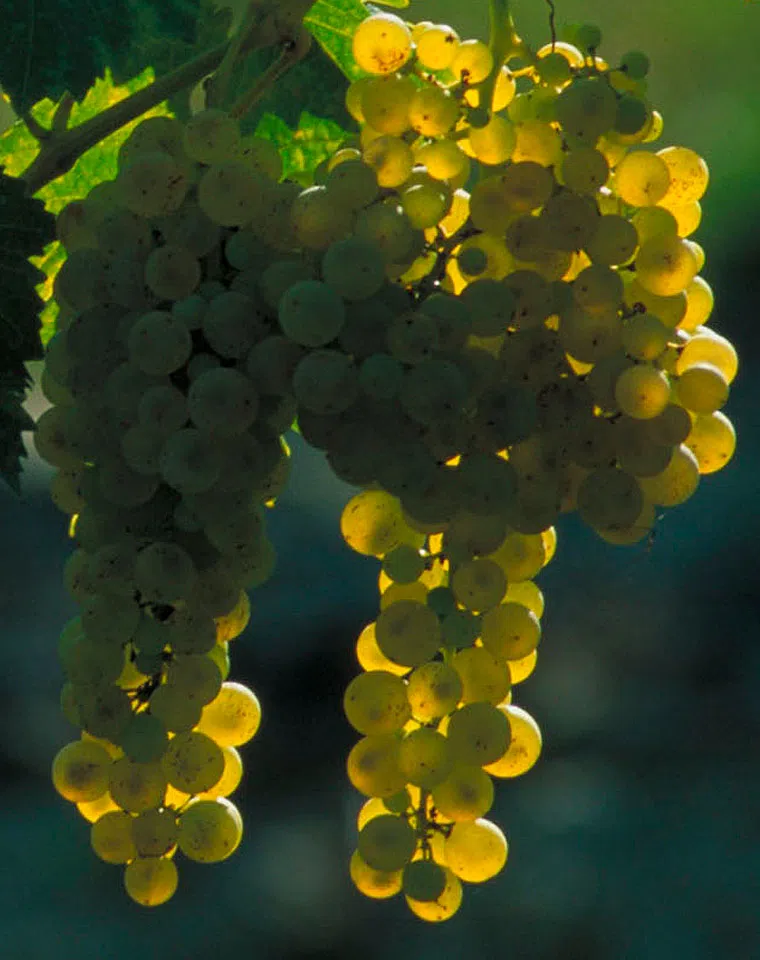
Far less famous than its illustrious parent, merlot noir, merlot blanc accounts for less than 0.5% of Bordeaux’s white‑variety plantings. It stands out for its medium‑sized clusters and golden, tightly packed berries. In the vineyard, this early‑ripening cépage requires careful attention to combat grey rot and drought. In bottle, it reveals light, softly spoken wines: low in alcohol, subtle, and charming in their simplicity.
And in the Glass?
Sight
a pale, light‑yellow colour.
Nose
a delicate bouquet of white flowers lifted by a hint of citrus.
Palate
supple, understated, with a discreet mineral freshness.
In blends
it contributes quietly to still white wines or, in the case of AOP Crémant de Bordeaux, to sparkling cuvées.

Good to know
- Merlot blanc belongs to the wider Cabernet family.
- It is also spelled merlau or merlaut.
- Its lineage does not make it a white counterpart of merlot noir.
- It is a fertile cépage with steady yields.
- It is almost never replanted today.

Where doesmerlot blanc grow
In very few places across Bordeaux, truth be told — even though it adapts well to different terroirs. You’ll find it playing a secondary role in the AOPs Bordeaux, Bordeaux Supérieur, Crémant de Bordeaux and Graves‑de‑Vayres.
Other white grape varieties