Sauvignon gris, a little aromatic powerhouse
Typical of the region—though still fairly discreet—sauvignon gris has close family ties: it is the grey‑skinned mutation of sauvignon blanc. But make no mistake. It carries a slightly fuller profile and a markedly expressive aromatic signature. With sauvignon gris, the nose always speaks first… and it has a lot to say.
Sensory profile
Early
Late
Sweet
Acidic
Light
Powerful
Who’s behind the skin of
sauvignon gris
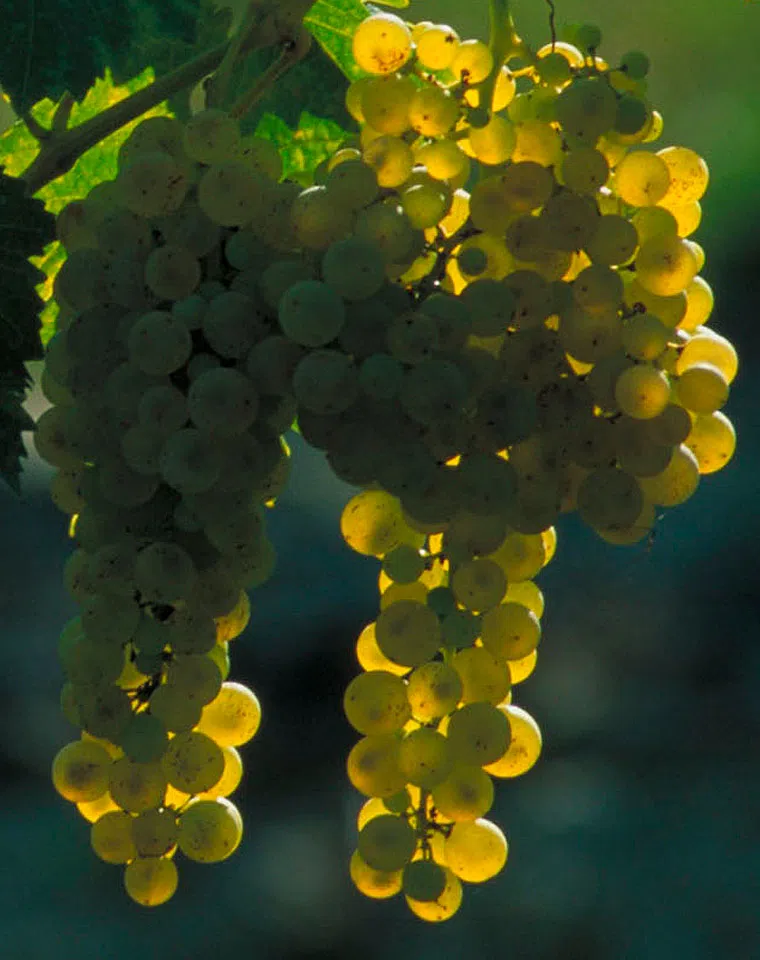
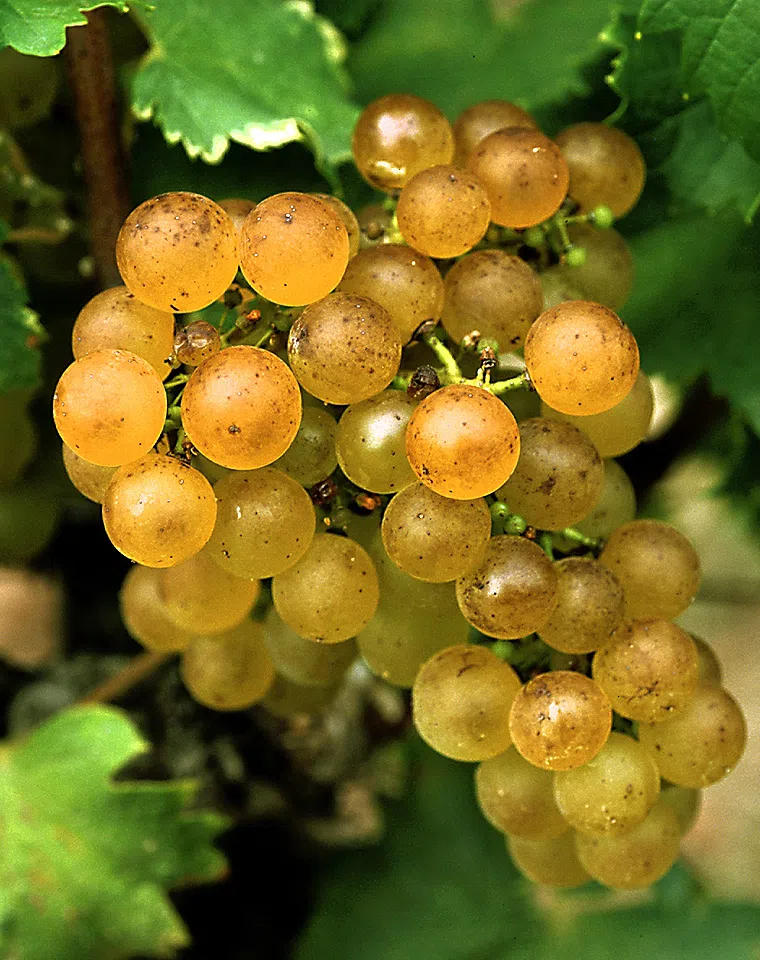
Sauvignon gris grows in small, compact clusters, with berries that blush toward pink as they ripen (a surprise, given the name). It may represent only a small slice of the vineyard today, but its presence is unmistakable: in the glass, it delivers a far more intense aromatic range than its famous white cousin—still elegant, but with a personality that steps forward. Less acidic and more textured, it brings its own distinct style to a blend.
And in the glass?
Sight
pale, shimmering straw.
Nose
delicate floral notes and touches of muscat, lifted by grapefruit, passion fruit, lychee, and even a hint of boxwood. A generous bouquet.
Palate
vibrant and expressive, offering both freshness and gentle power, with a subtle menthol or orange zest twist on the finish.
In blend
above all selected for its vivid aromatic contribution, adding lift and nuance to its fellow white cépages.

good to know
- Sauvignon gris travels under many names: sauternes, blanc fumé, ahumat, fié, surin du Poitou… depending on the region.
- It originates from the southwest of France.
- It is sensitive to powdery mildew and flavescence dorée.
- It gives its best results when harvested cool, early in the morning.
- Mostly used in blends, though some winemakers bottle it solo to showcase its singular character.

Where does
sauvignon gris grow?
It appears in small touches throughout the region, planted in both primary and accessory roles across a variety of terroirs—never dominant, but always noticeable where it grows.
Other white grape varieties