Petit verdot, a small grape with serious cHaraCter
Bold structure, intense aromatics, and that distinctive spicy edge: petit verdot may be a discreet partner to cabernet sauvignon and merlot, but it brings plenty of attitude. Long overshadowed by its more famous companions, it’s now earning fresh attention—especially as climate patterns evolve. Small in name, big in impact.
Sensory
profile
Early
Late
Sweet
Acidic
Light
Powerful
Who’s behind the skin of
petit verdot ?
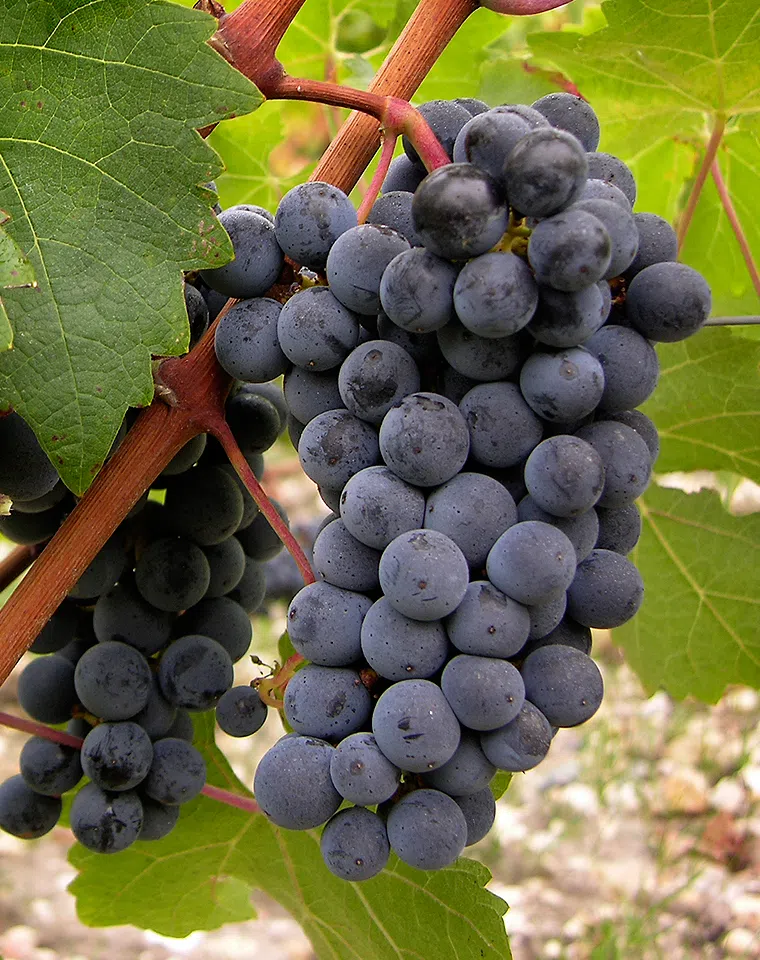
Encounter it once, and it’s hard to forget. Though petit verdot accounts for just 1.3% of Bordeaux’s red varietal plantings, its compact cylindrical clusters and dark blue‑black berries channel a remarkable concentration of character: deeply coloured wines, firm tannins, and complex, spicy aromatics. In the vineyard, this low‑vigour variety reveals its secret weapon: a naturally late ripening cycle, increasingly valuable in warmer seasons.
And in the glass?
Sight
an exceptionally intense, saturated colour.
Nose
a burst of spice layered with hints of cocoa, coffee, violet and liquorice.
Palate
volume, assertive tannins, and vibrant acidity that keeps everything lifted and energetic.
In a blend
even a small percentage amplifies texture, power and aromatic depth.

good to know
- Petit verdot originates from the Pyrenees, where it has long been known as lambrusquet.
- Depending on berry size, yields can range from moderate to generous.
- Early budbreak makes it sensitive to spring frost, while its berries—once ripe—can split and attract botrytis: a real challenge for growers.
- A favourite in the blends of several crus classés, it is often destined for ageworthy wines thanks to its pronounced tannic structure.

Where does
petit verdot grow?
Scattered across various Bordeaux terroirs, petit verdot often plays a secondary but essential role. It thrives most naturally on the Left Bank, where this quintessentially Médoc varietal feels right at home. It also performs beautifully in the warm, well‑watered soils of the Graves.
Other red grape varieties
Merlot, Carménère, Cabernet sauvignon, cabernet franc, malbec