The muscadelle, the secret charmer of Bordeaux whites
Minor in volume yet major in personality, muscadelle brings an irresistible charm to Bordeaux whites thanks to its generous texture and, above all, its unmistakable aromatic signature. Its muscat‑like notes often lead to confusion with that cépage — but make no mistake, muscadelle has its own story to tell.
SENSORY PROFILE
Early
Late
Sweet
Acidic
Light
Powerful
WHO’s BEHIND the skin of
muscadelle
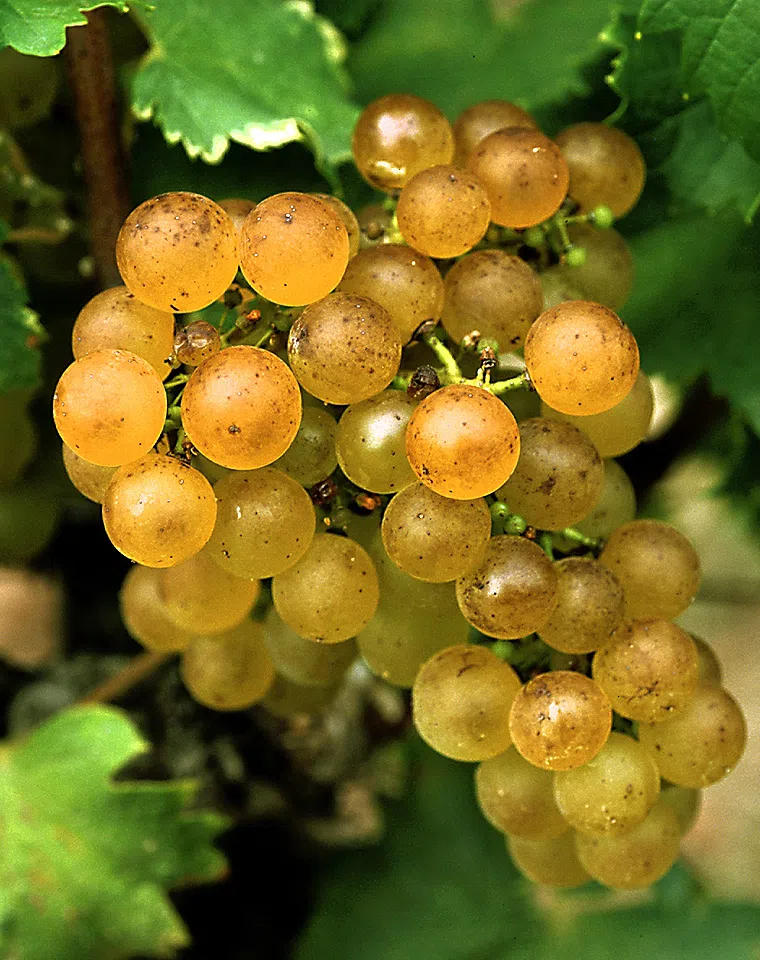
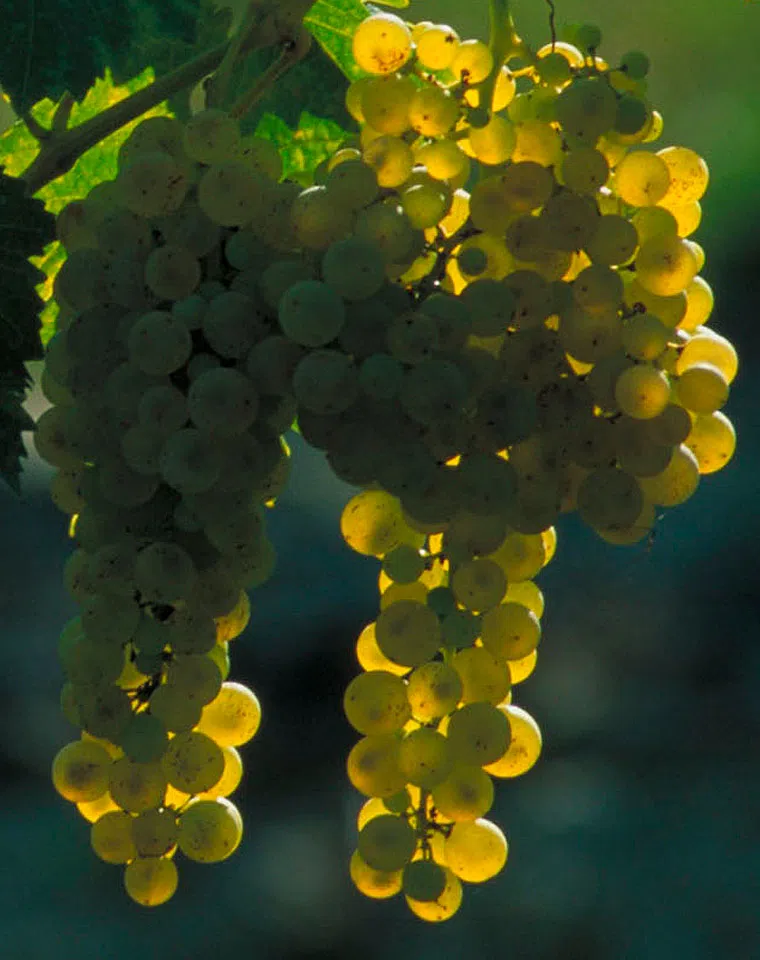
Quietly present across the region, muscadelle accounts for about 5% of Bordeaux’s white plantings. It’s instantly recognisable by its long, loosely formed clusters and speckled berries, which shift from pale white to pink‑grey as they ripen. Highly sensitive to botrytis (noble rot), it shines in liquoreux wines, while also finding its place in dry whites. In both cases, it brings enveloping texture, generous aromatics and naturally low acidity.
AND IN THE GLASS?
Sight
A colour that evolves from pale green to deep golden hues with time.
.
Nose
Expressive and charming, blending musky notes with acacia, honeysuckle and honey.
Palate
Soft, low‑acid and silky, stretching into a long aromatic finish.
In blends
Most often used in sweet wines to enhance the sémillon and sauvignon blanc duo. Rarely exceeding 10%, but always enough to make a difference.
THE KNOWLEDGE BOX
- Muscadelle originates from South‑West France.
- In Gironde, it has partnered with sémillon since the 16th century in the creation of great liquoreux wines.
- It goes by many names — issal de tarayre, marmésie, bouillenc, musquette, raisinote, cadillac, or muscat fou depending on the region.
- It is a fragile cépage, sensitive to oidium, grape‑worm damage, wasps and sour rot.
- It shows moderate vigour, early ripening and a short growing cycle.

WHERE TO FIND
muscadelle?
Present in small pockets throughout Bordeaux, muscadelle thrives in clay‑rich soils, which bring out its roundness and aromatic depth. It takes centre stage in the region’s sweet‑wine AOPs — particularly Sauternes and Barsac.
Other white grape varieties