The merlot, you can’t help but
fall for
Once upon a time there was a signature red grape of Bordeaux, named after a little blackbird — merle — a nod to the deep, dark hue of its berries. Juicy, generous and velvet‑soft, merlot has a way of charming every palate it meets.
sensory
profile
Early
Late
Sweet
Acidic
Light
Powerful
Who’s behind the skin of Merlot ?
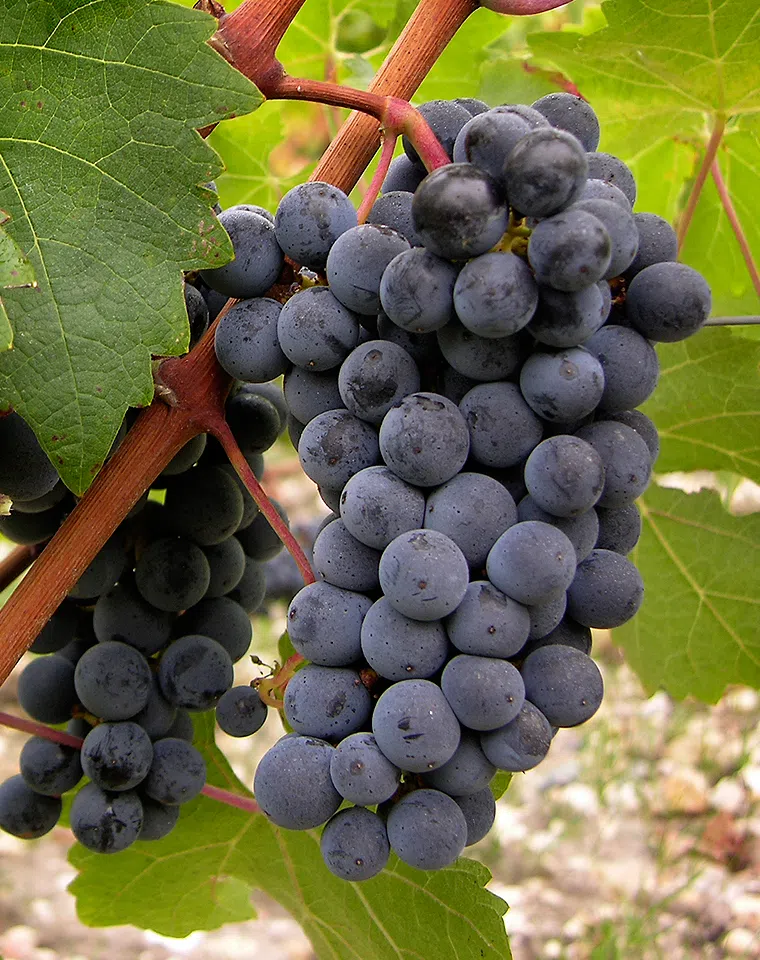
Round berries, generous clusters, and a colour often brushed with violet‑blue highlights: merlot is unmistakable. As the dominant red grape of Bordeaux (60% of the AOP’s plantings), it’s everywhere — and endlessly versatile. It yields an impressive range of red wines, from light, juicy, easy‑drinking styles to dense, powerful cuvées built for long ageing. It can also shine in rosé and, more occasionally, as a blanc de noirs Crémant.
And in the glass?
Sight
deep, saturated colour with an almost seductive glow.
Nose
hallmark notes of cherry, plum, fig and violet; with age, touches of chocolate or coffee.
Palate
a supple, rounded, velvety texture that wins you over instantly.
In blends
merlot’s natural softness is beautifully lifted by cabernet sauvignon, which adds structure and tannic backbone.

Good to know
- Merlot hails from Southwest France, with Bordeaux as its historic cradle.
- It’s the offspring of cabernet franc and magdeleine noire des Charentes.
- Naturally early‑ripening, it tends to produce wines with generous alcohol and moderate acidity.
- It thrives on the region’s clay‑limestone and gravel soils.
- Historically, it went by many bird‑inspired nicknames: merlau, plant médoc, sémillon rouge, béguey, picard, alicante, crabutet noir…

Where does
Merlot grow?
Everywhere in Bordeaux — but especially on the Right Bank, in AOPs such as Saint‑Émilion, Pomerol and Fronsac. You’ll also meet it in countless blends across the entire region.
Other red grape varieties
Cabernet sauvignon, cabernet franc, petit verdot, malbec, carménère