Cabernet Franc, the grape with a
finely-etched nose
A subtle Iberian breeze runs through Cabernet Franc: originally from the Spanish Basque Country, it crossed the Pyrenees after the last glaciation before settling in southwest France. Always ready to slip into a blend, it is the ultimate complementary cépage — impossible to resist its finesse, freshness, and graceful ageing capacity.
Sensory
profile
Early
Late
Sweet
Acidic
Light
Powerful
Who’s behind the skin ofcabernet franc ?
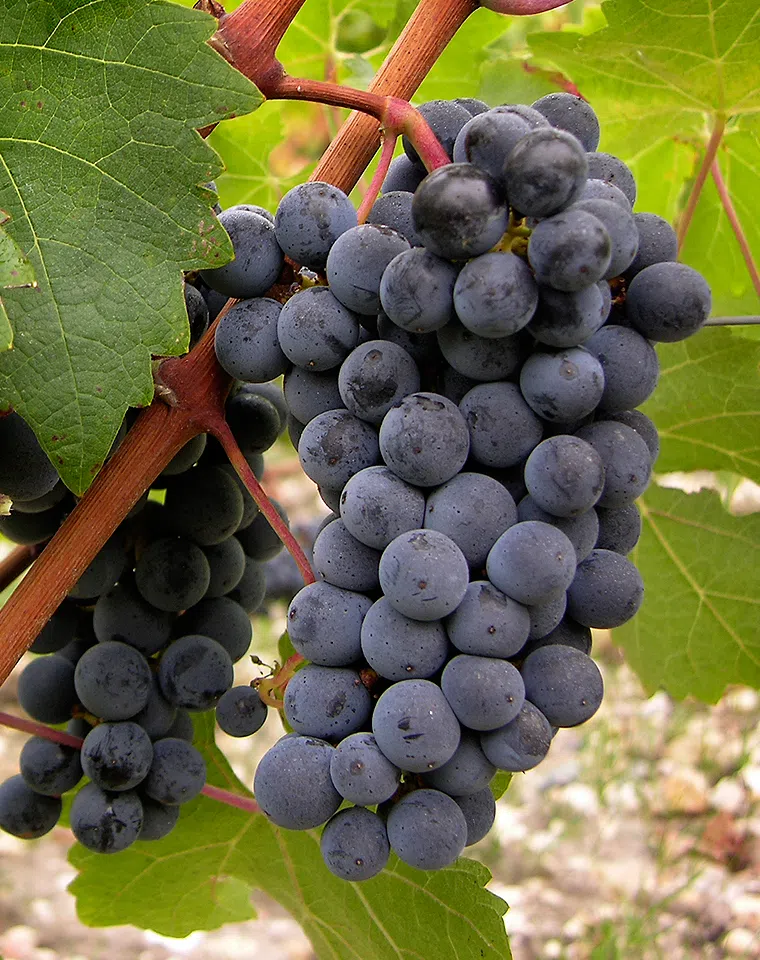
Medium‑sized clusters and small, perfectly round berries: Cabernet Franc doesn’t need to show off to claim its place, now covering 9% of Bordeaux’s red vineyard area. Harvested between early‑ripening Merlot and late‑ripening Cabernet Sauvignon, it requires attentive care when frost, drought or powdery mildew come knocking. But in the glass, what elegance: delicate fruit and floral notes give it undeniable charm. Irresistible.
And in the glass?
Sight
a moderately coloured robe, especially when compared with Cabernet Sauvignon.
Nose
a wide aromatic palette where raspberry and violet often take centre stage.
Palate
freshness, finesse and silky, well‑drawn tannins.
In a blend
it softens Cabernet Sauvignon’s power and gently complements Merlot’s roundness.

Good to know
- Cabernet Franc is likely the oldest of Bordeaux’s cépages.
- It belongs to the Bordeaux family of carmenets, red varieties whose name echoes the Latin carminium.
- Its berries produce wines naturally rich in polyphenols (the building blocks of tannins), giving them excellent ageing potential.
- It goes by many names: bouchet in the Libournais, bouchy in the Pyrénées‑Atlantiques, breton in the Loire Valley, and acheria in Spain.

Where does
cabernet franc grow ?
You’ll spot it throughout Bordeaux, thriving in well‑exposed clay‑limestone and sandy soils. Its stronghold is Saint‑Émilion, where it accounts for roughly one‑third of plantings. On the Left Bank, in the Médoc and the Graves, it plays a more discreet role — but its touch of elegance is always welcome.
Other red grape varieties