MEDOC CRUS ArtisansClassification
What is the point of a classification ?
A classification is a bit like a map for navigating the world of Bordeaux wines. It highlights wines that stand out for their quality, while providing valuable pointers for exploring the region’s terroirs – useful for guiding wine enthusiasts and preserving the value of the region’s wines!


What is the classification
Exactly ?
Here, great wines and artisanal expertise go hand in hand.
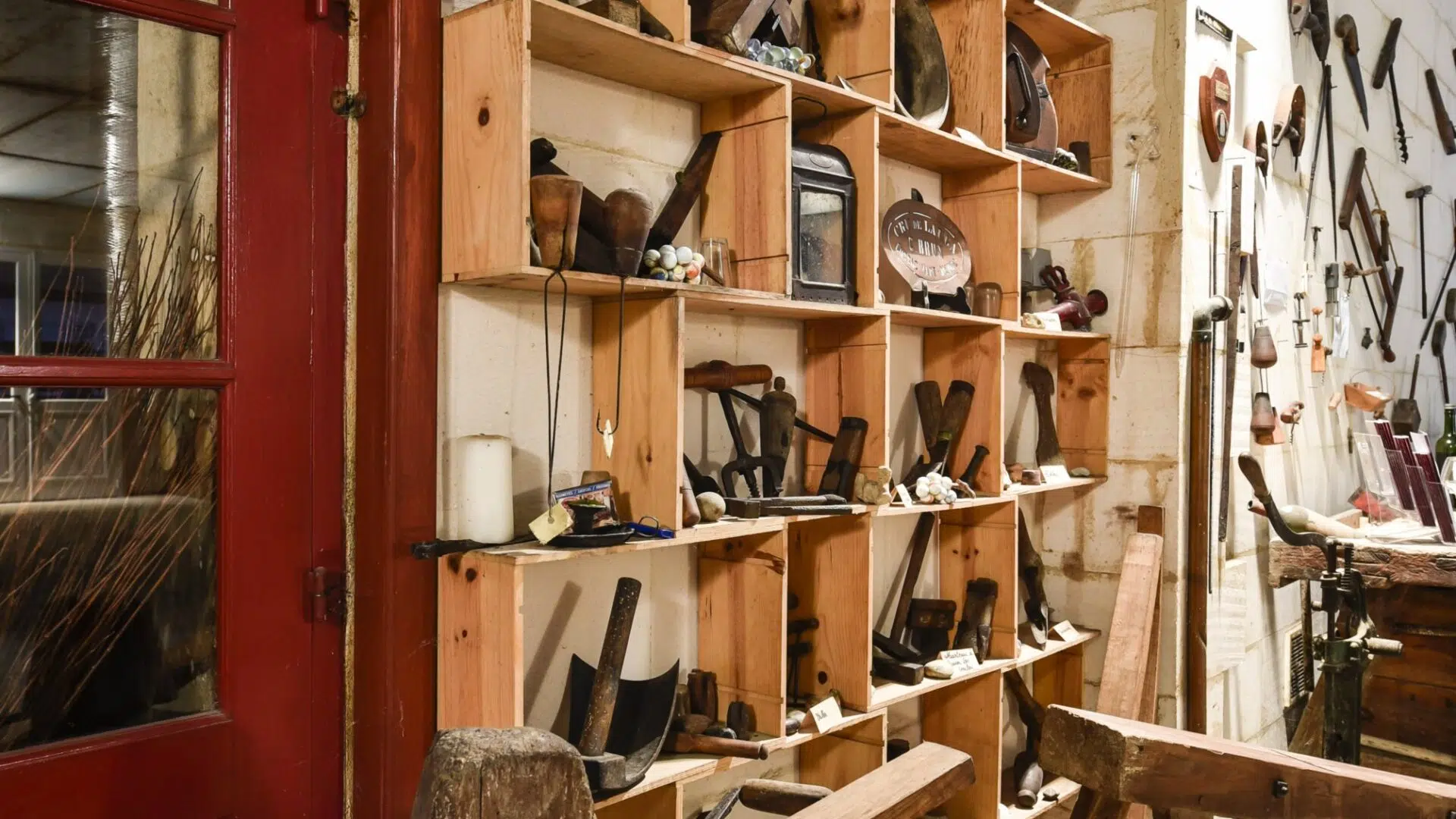
The concept of “Crus Artisans” dates back many years, 150 to be precise! In the 19th century, many artisans in the Médoc countryside, such as wheelwrights, blacksmiths, coopers, carpenters and bakers owned a few vines that they cultivated themselves. Winegrowing being a craft in itself, it deserved a name… and its own classification.
What are the defining criteria?
A Médoc Cru Artisan must fulfil two criteria:
- The vineyard owner must be an artisan winegrower, i.e. someone who is fully involved in the winemaking process, from tending the vines to selling the wines produced.
- The wines must belong to one of the eight PDOs of the Médoc region. Need a quick reminder? The eight PDOs are Médoc, Haut-Médoc, Listrac, Moulis, Margaux, Saint-Julien, Pauillac and Saint-Estèphe.
What makes it stand out from other classifications ?
The following five key points are proof that the classification deserves a category of its own.
At the heart of its distinctive character are winegrowers who harvest their own grapes and are involved in every stage of the process, from winegrowing to bottling.
These winegrowers are also multitalented: they produce wine, sell it and manage their entire estate.
It goes without saying that these estates are relatively modest in size.
Only Médoc red wines are given the limelight; classifications exist for other terroirs too.
The list is revised every five years, meaning the classification evolves regularly.
See also : Bordeaux classifications.
And who is included in the list right now ?
33 estates for the five vintages from 2022 to 2026.


A bit of
history
Before becoming an official classification, Médoc Crus Artisans started out as a small venture by winegrowers determined to put their artisanal expertise, their independence and the undeniable quality of their wines on the map. A turbulent history, spearheaded by a few headstrong individuals.
1868
Creation of the “Crus Artisans” name
The “Cocks & Ferret” guide first coined the term, laying the foundations for the name of the future classification, but a little extra patience was required…
1930s
Discontinuation of the “Crus Artisans” name
Some of the small estates did not survive the war or the Great Depression. With them, the concept of “Crus Artisans” gradually petered out.
1989
Creation of the Médoc Crus Artisans winegrowers’ association
In the 1980s, a handful of young Médoc winegrowers worked hard to restore the name to its former glory. They paved the way by founding a winegrowers’ association.
1994
European recognition
A new milestone was reached at European level, with the EU authorizing the term “Crus Artisans” to appear on the front label of the bottles.
2006
First classification
A new milestone was reached at European level, with the EU authorizing the term “Crus Artisans” to appear on the front label of the bottles.
2017
New specifications
The Médoc Crus Artisans changed to a five-year classification. The cards are now reshuffled every five years.
2022
Last revision of the classification to date
33 estates are currently listed up to the 2026 vintage.


