How to choose a rosé wine?
Rosé has its habits: big shared tables, long apéritifs, fresh and easygoing cuisine.
But when it comes to choosing a bottle — at a wine shop, in a supermarket or online — things can get tricky. Between colour nuances, styles, cépages and AOPs, you need a few markers to navigate. To understand what shapes the personality of Bordeaux rosés and pinpoint the one that fits your expectations, here’s your step‑by‑step guide.
How winemaking choices shape thetaste of rosés wines
DID YOU KNOW?
The AOC Bordeaux Rosé brings together more than 1,200 producers. With such a diversity of hands and approaches, there is always a Bordeaux rosé that fits the moment.
Crafted across the entire Bordeaux region and influenced by the freshness of the Atlantic Ocean, Bordeaux rosés show a unique profile in France: light‑coloured, vibrant, fruity, elegant, with a bright, precise aromatic expression.
Their signature lies in one essential gesture: direct pressing.
The grapes are pressed immediately after harvest, with no extended maceration. The clear juice then ferments for 3 to 4 months.
This method delivers precision, freshness and clarity.
Recognizing the cépages behindrosé wines
In Bordeaux, blending is an art in itself. By combining cépages from complementary parcels, each winemaker builds a unique aromatic balance.
Bordeaux rosés rely on black‑skinned cépages with white juice:
- Cabernet Franc: floral notes, small red berries, fresh tension
- Merlot: roundness, softness, gentle structure
- Cabernet Sauvignon: intensity, darker fruit, a more assertive character
Want to dive deeper into the logic of blends?
The ateliers at the École du Vin de Bordeaux let you understand, compare — and even try blending yourself.
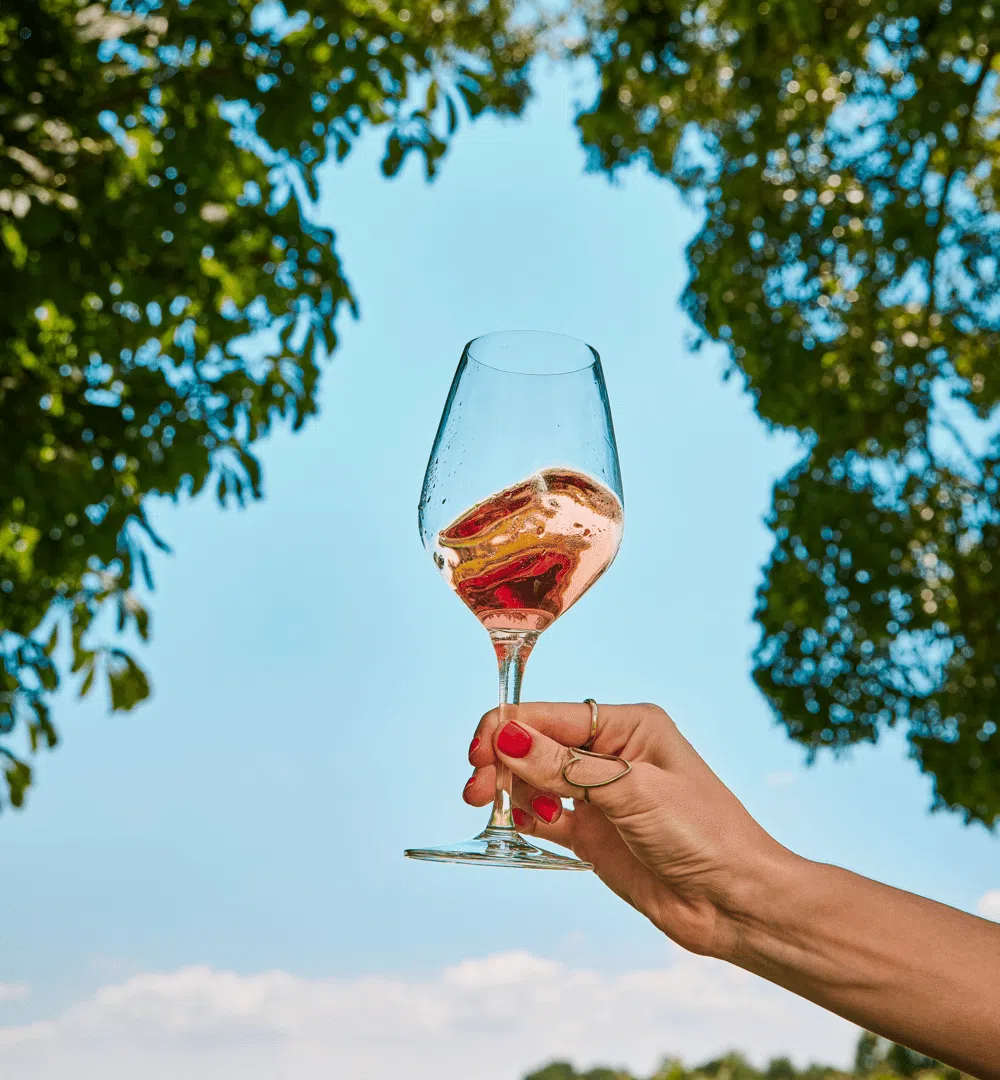
Fresh, fruity rosés for a bright expression from start to finish
Still rosés show limpid, luminous, almost crystalline colours.
On the nose: strawberry, redcurrant, pink grapefruit.
On the palate: fresh structure, direct fruit, supple texture.
Food pairings:
Salads, grilled fish, marinated vegetables, barbecue, spiced dishes, burgers, pizzas, tapas, charcuterie.
A style that slips easily from one dish to the next.
Fresh, fleshy rosés for more presence at the table
Welcome to the world of Bordeaux Clairet.
With its raspberry‑pink robe — deeper than a rosé, lighter than a light red — Clairet occupies a category of its own.
Its hallmark: a longer maceration than Bordeaux Rosé.
The result: a reinforced colour, fuller body, and very soft tannins.
Around 100 producers maintain this style over a little more than 400 hectares.
Clairet develops aromas of blackcurrant, strawberry, rose and a more ample texture, always carried by freshness.
Perfect with: picnics, grilled dishes, shellfish, lightly spiced recipes, world cuisines, red‑fruit desserts.
Sparkling rosés for a bright, effervescent expression of fruit
Did you know?
The AOC Crémant de Bordeaux relies on exclusively manual harvesting — carried out by about a hundred producers over 371 hectares.
Crémant rosés offer fine bubbles, a pale pink colour with orange highlights, and aromas of raspberry, strawberry and redcurrant.
Most cuvées are brut, with a few demi‑sec versions for a softer profile.
They pair beautifully with shellfish, cheeses or desserts.
Formats to know when choosing your rosé
Bottle: the essential format
Bag‑in‑Box (3 or 5 L): long shelf life thanks to the absence of air, ideal for enjoying over time
Magnum (1.5 L): perfect for large gatherings
Did you know? Rosés are best enjoyed young — within two years of purchase — and served between 7°C and 11°C.
To go
further
To refine your choice according to a dish or aromatic style, explore our rosé‑specific food and wine pairing recommendations for Bordeaux.

GO
further
-
Vintage


