Lussac Saint-Émilion, tickled red
With its scenic slopes and history-laden estates, Lussac Saint-Emilion has been living in tune with the vineyard for quite some time. While more discreet than its famous neighbor, it still produces powerful, round red wines that are well worth the detour.
What is the Lussac Saint-Emilion wine region?
Key points to remember
- More than 1,450 hectares of vines on the commune of Lussac, lovingly tended by 170 winegrowers.
- Terroirs nestled north of the legendary Saint-Emilion slope with an array of plateaux and valleys forming a natural amphitheater. They also face due south – an absolute dream for winegrowers!
- A whole range of limestone, clay-limestone and sandy-clay soils (we’ll come back to this later). Add to that a temperate oceanic climate – hot summers, a warm early fall, moderate rain – and you’ve got the perfect combo for growing wonderfully expressive grapes.
Why do people love Lussac Saint-Emilion and its wines?
- Because its wines are always a pleasure to (re)taste!
- Because they go perfectly with robust flavors, such as red meat, game and cheese
- Because the environment is a key priority for the PDO, with 100% of estates environmentally-certified
- Because its estates are small in size with plots lovingly tended to like gardens
- Because its rolling landscapes are quite simply breathtaking
- Because the area has everything you could hope for in an unforgettable stay: visits to châteaux, vineyard strolls, discovery workshops, and more…

What is the
Lussac Saint-Émilion style?
These wines are endlessly charming! Elegant and well-structured, velvety and generous, they are sure to win over your taste buds.
An irresistible signature showcasing the tradition of the Bordeaux Right Bank.
Beyond their intense ruby-red color, Lussac Saint-Emilion wines boast powerful notes, starting out with delicious red fruit enhanced by a little twist of licorice, prune or spices. At times, due to barrel ageing, toasted and vanilla aromas join the show. The depth and character of these wines only improve with cellaring to reveal more complex nuances, such as game.
Aging potential depends on the château and vintage, but some wines can be happily cellared for five to ten years… sometimes far longer.
See also Grape varietiesWhich kind of wines can be found in Lussac Saint-Emilion?
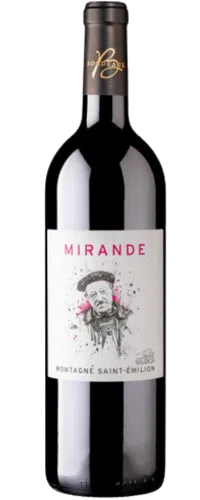
Here you will find 100% red wines.
In the blends, Merlot leads the way with its round, smooth and fruity character. Cabernet Franc usually plays the perfect companion: fresh, well-structured with game-changing aging potential.

Funfacts
Three fun facts you need to know about Lussac Saint-Emilion
Let’s take a look behind the scenes…
1.
Saint Emilion was an eighth-century Breton monk who founded this famous wine-producing town on the Right Bank. In fact, his real name in Latin was Aemilianus.
2.
While we know where the name “Saint-Emilion” came from, what about “Lussac”? Legend has it that the commune was named after Lucius, the fortunate owner of a large, local farming estate during Roman times.
3.
Before becoming the northernmost of the Saint-Emilion appellations, the region was a prominent Druidic site. To prove it, just visit the Picampeau stone megalith – it’s very impressive!
Let’s talk about the soil
The Lussac Saint-Emilion vineyard benefits from a wide variety of soils typical of the region: a limestone plateau and clay-limestone slopes to the west, ideal for growing Merlot, plus layers of ancient sand and clay to the north, laid down years ago by the river.
En voir plus
To top it off, these terroirs of valleys and plateaux are arranged in a semicircle, providing ideal natural drainage. What more could you ask for?


Let’s travel back in time
Here, it all began more than 2,000 years ago. As early as 56 BC, the Romans cut back the forest and planted the first vines. There are several Gallo-Roman artifacts, such as amphoras and pruning knives that testify to these times.
En voir plus
While there was a short break during Emperor Domitius’ reign, the winegrowing spirit of Lussac persisted and was revived in the Middle Ages. Once again, wine became a valuable commodity thanks to the work of the Cistercian monks in the vineyard and English wine lovers who were more than happy to buy. The exceptional quality of the region’s wines was unanimously recognized during the famous Age of Enlightenment.
In the 19th century, the winegrowers showed courage and determination during the phylloxera crisis, which ravaged the vineyard. The 20th century heralded official acknowledgment and the Lussac Saint-Emilion PDO was finally recognized in 1954. Its red wines have continued to delight great wine enthusiasts ever since.