Listrac-Médoc the pinnacle of
freshness
Among the six communal PDOs of the Médoc, Listrac is in a league of its own. Boasting an unusual terroir, it is located a little higher than its neighbors – just enough to produce delicious and refreshing wines offering excellent value for money. And it is well worth the detour!
What is the Listrac-Médoc wine region?
Key points to remember
- 25 winegrowers across 570 hectares in the commune of Listrac-Médoc, i.e. 4% of the Médoc vineyards.
- A unique location and terroir: the appellation sits atop the highest rises of the Médoc, just 30 minutes from Bordeaux. Its terroir was able to preserve its original characteristics since a large proportion of its soils were not dug up by the Gironde Estuary over thousands of years. And to top it all off, it benefits from a temperate climate thanks to the proximity of the Landes Forest, the Garonne River and the Atlantic Ocean.
- A patchwork of gravel and clay-limestone soils where merlot reigns supreme, accounting for much of the charm of this PDO.
Why do people love Listrac-Médoc and its wines?
- Because it is the only PDO in the Médoc where Merlot takes center stage
- Because the resulting wines are fresher and fruitier than elsewhere in the Médoc
- Because almost no-one knows about them due to the small size of the appellation
- Because, despite their rarity, they are still highly affordable, especially compared to neighboring communal PDOs
- Because here, wine is often a family affair, with passionate winegrowers at the helm
- Because local châteaux open their doors for captivating visits and tastings, which keep you coming back for more!
What is the Listrac-Médoc
style
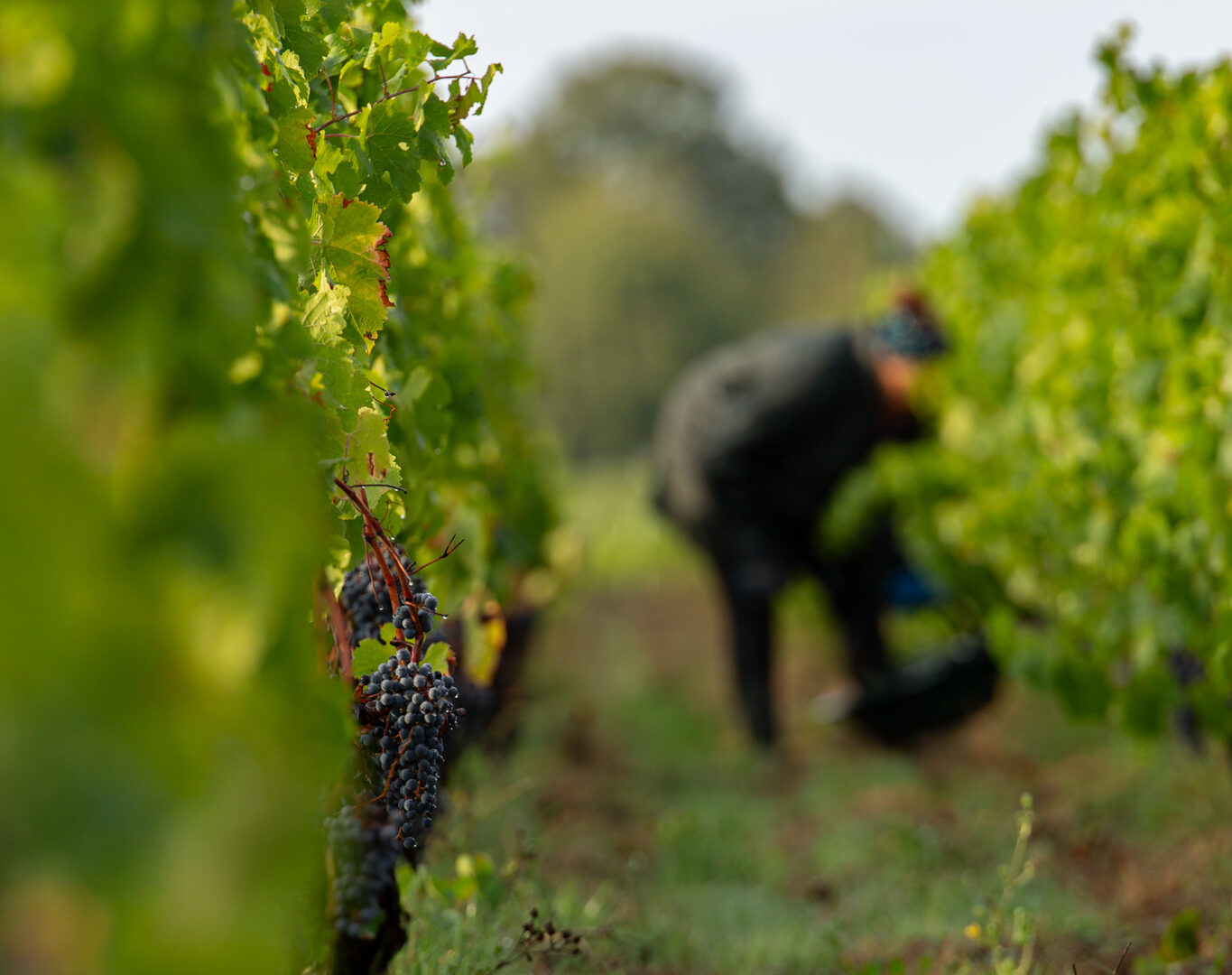
Here, the Médoc produces lighter wines full of charm. In other words, it is irresistibly different from what can be found in the surrounding appellations.
This fresh and fruity style is resolutely easygoing.
Listrac-Médoc owes its style to its unique terroir, producing very refreshing wines which wonderfully express the roundness and smoothness of Merlot.
The result? Generous aromas of blackberry and redcurrant, sometimes revealing hints of licorice, sweet spices and leather after several years of cellaring. The palate is rich and velvety.
While these wines know how to age gracefully, they also showcase their talent in their youth.
Which kind of wines can be found in Listrac-Médoc?
Exclusively red wines!
As you have probably guessed by now, merlot is the main grape variety grown here. An original choice made by the appellation, which strongly defines its identity. This grape variety is most often blended with cabernet sauvignon and, to a lesser extent, petit verdot and cabernet franc.

Fun facts
Three fun facts you need to know about Listrac-Médoc
Juicy facts you can enjoy without moderation!
1.
The name “Listrac” dates back to the Middle Ages and is derived from the Latin “lista”, meaning “border”. And with good reason, since the village is located right between forest and vines, at the crossroads between nature and viticulture!
2.
This PDO is nicknamed “the roof of the Médoc”. At 43 meters in altitude, Listrac is hardly a Himalayan Mountain top, but it is nevertheless the highest point in the Médoc. And this changes everything for its terroir.
3.
There was a time when you could order a glass of Listrac-Médoc in the bars of French trains! Distributed by the Compagnie Internationale des Wagons-Lits (International Sleeping-Car Company) for several decades, the PDO wines traveled near and far… and therefore really benefited from being put under the spotlight.
Let’s talk about the soil
The Listrac-Médoc terroir has two faces. To the west, on the historic “terrace 1”, predominantly clay-limestone soils offer the ideal playing field for merlot to showcase all its roundness.
En voir plus
To the east, the Garonne River excavated soils where it deposited gravel coming straight from the Pyrenees, propitious to growing cabernet sauvignon… even if merlot is also highly present here.


Let’s travel back in time
Located on the main road linking Bordeaux to Soulac-sur-Mer, Listrac has long benefited from its strategic position for trade. Winegrowing developed very quickly and, from the 18th century onwards, at least three smallholdings were already renowned for their viticultural ambitions.
En voir plus
Despite some hard knocks, from phylloxera to the ravages of warfare and various crises, Listrac fared well. Even better – its wines are ranked among the greats thanks to the recognition of several Crus Bourgeois in 1932, their popularity in the wagons-bars of French trains from 1935 onwards, and the creation of their cooperative cellar the same year. Their PDO, which was officialized in 1957, further confirmed what everyone knew already: that here, the terroir is like no other.