Haut-Médoc easygoing
by nature
The diverse terroirs of the Haut-Médoc have many reasons to win over wine enthusiasts: wild natural surroundings offering an invitation to escape, passionate and friendly winegrowers, and a wide range of high-quality wines at affordable prices. What more could you ask for?
What is the Haut-Médoc wine region?
Key points to remember
- 240 winegrowers across 25 communes, 17 of which are home to star PDO wines.
- 60 kilometers of vineyards nurtured by the influence of the Gironde Estuary, which helps moderate high summer temperatures and the vagaries of winter. The vines also benefit from a wealth of biodiversity, as shown by the fact that a large majority of them belong to the Médoc Regional Natural Park.
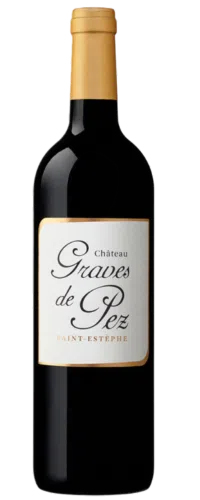
- The Haut-Médoc PDO, which is actually part of the Médoc PDO delimited area, encompasses six communal PDOs, whose names are sure to titillate the taste buds: Saint-Estèphe, Pauillac, Saint-Julien, Listrac-Médoc, Moulis and Margaux.
Why do people love Haut-Médoc and its wines?
- Because it is the closest PDO to Bordeaux, making it an essential stop when visiting the vineyards
- Because the diversity of its wines suits all tastes
- Because its cuvées offer excellent value for money
- Because each winegrower has their own personality, which shines in each bottle
- Because they are devoted to preserving expertise and nature
- Because here you can savor both delicious wines and the sea air of the Atlantic Ocean on the stunning beaches of Lacanau, Hourtin and Carcans

What is the
Haut-Médoc style?
The wines in this appellation combine structure, elegance and wonderful aging potential. They each reveal their own distinctive character, while being unanimously easygoing.
To sum up, these wines are perfect for any occasion.
And that’s not all! In addition to the PDO’s classics, you can also discover more original cuvées which dare to break away from conventions, from unexpected blends to varietal wines, unusual aging in amphoras, casks or egg-shaped vats, etc.
A note to all curious palates: Haut-Médoc wines are full of surprises!
Which kind of wines can be found in the Haut-Médoc?
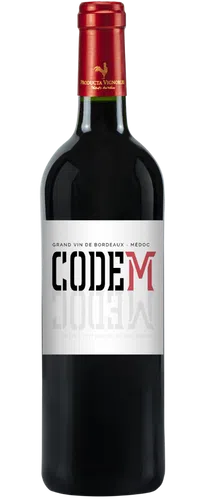
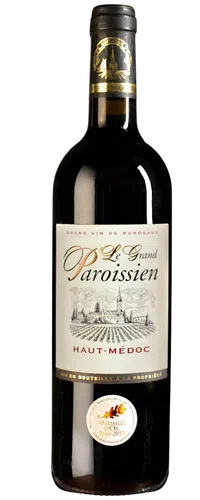
Red wines, of course !
Traditional Haut-Médoc wines call on cabernet sauvignon and its spicy nuances, often underpinned by hints of vanilla imparted by barrel aging. Merlot, meanwhile, adds roundness, smoothness and fruitiness. And for greater structure and complexity, cabernet franc and petit verdot (also bringing freshness) can come into play.
See also: Grape varieties
Fun facts
Trois anecdotes que vous devez absolument savoir sur le Haut-Médoc
Three fun facts you need to know about Haut-Médoc.
Open your taste buds, this appellation is full of surprises!
1.
If you look at a map of the Gironde, the Haut-Médoc (which literally translates as “High Médoc”) is in fact located below the Médoc. But it was actually its position on the upper part of the Estuary (towards Bordeaux) which was important to sailors at a time when navigation was in full swing… and which gave this region its name.
2.
Knowing where “Haut” comes from is one thing. But what about the “Médoc” part of the name? It comes from the Latin “in medio aquae”, meaning “in the middle of the water”: a nice nod to the fact that the Haut-Médoc is cradled by the Gironde Estuary and the Atlantic Ocean.
3.
While the local vineyards are intrinsically linked to nature, certain PDO plots are planted next to more urban areas. In fact, three of its communes belong to the Bordeaux metropolitan area: Blanquefort, Parempuyre and Le Taillan-Médoc.
Let’s talk about the soil
To understand the soils of the Haut-Médoc, you need to pay attention to its topography. In fact, its vineyard is divided into well-defined rises (known locally as “cos”).
En voir plus
Where do these rises come from? They were formed due to erosion and the Garonne and its tributaries (known locally as “esteys” and “jalles”) slowly digging their riverbeds during the glacial period. That’s why the soils are made up of a combination of sandy gravel layers swept along by the Garonne River during the Quaternary period and clay-limestone dating back to the Tertiary period. It’s as simple as that.


Let’s travel back in time
It is not by chance that the Haut-Médoc was one of the first PDOs to be recognized in 1936: its rich winegrowing history dates back several centuries. In addition, from the 16th century onwards, the Bordeaux nobility chose to build estates in the area, which were the predecessors of the famous Bordeaux “châteaux” that can be found there today.
En voir plus
In the 18th century, the “French new Clarets” caused quite a stir, especially among France’s English neighbors. These light and pale-colored Bordeaux wines boosted the development of the vineyards, leading to the formal identification of the best terroirs, including those of the Haut-Médoc. It was also during this time that the future PDO grape varieties were planted. From then on, winegrowing became widespread – and still forms the beating heart of the appellation.