Sainte-Croix-du-Mont: one appellation, two treasures
In Sainte-Croix-du-Mont, nature has really achieved a double feat. On the surface, the vines produce fine sweet white wines, aptly nicknamed “the golden nectars of the slopes”. Below the surface lies another incredibly picturesque treasure: a fossilized oyster reef.
What is the Sainte-Croix-du-Mont wine region?
Key points to remember
- 22 estates and 200 hectares of vines, concentrated in a single commune: Sainte-Croix-du-Mont, of course.
- A hilly terroir on the Right Bank of the Garonne, south of Bordeaux. Here, the climate is naturally propitious to the development of Botrytis cinerea (also known as “noble rot”). By concentrating aromas and sugar in the berries, this small fungus is essential for the production of sweet white wines.
- An unusual natural curiosity is hidden underneath the vineyards: a panoramic plateau formed by giant fossilized oyster banks dating back to the Tertiary period, which has become the PDO’s hallmark. It is nothing short of spectacular!
Why do people love Sainte-Croix-du-Mont and its wines?
- Because its wines, elegantly combining sweetness and aromatic richness, are quite simply delicious
- Because they are the result of a great deal of patience and fine-tuned winegrowing expertise
- Because it’s not every day you see vines planted on a 20-million-year-old oyster bed!
- Because what could be better than soaking up the panoramic views offered by these slopes with a glass of wine in hand?
- Because Sainte-Croix-du-Mont is brimming with heritage and natural wonders: a fossilized oyster cliff, Château de Tastes, charming streets…and to top it all off, a warm welcome guaranteed!

What is the
Sainte-Croix-du-Mont style ?
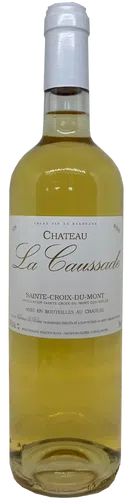
Do you notice a golden color, aromatic richness and elegant length on the palate? If so, there’s no doubt you’re tasting a sweet white wine from Sainte-Croix-du-Mont.
Sweetness, yes, but still with a lovely freshness providing wonderful balance.
These charming wines reveal enveloping aromas of grapes, figs, white flowers such as acacia and honeysuckle, apricot, pineapple, peach and candied fruit.
Powerful and complex, they are incredibly intense and long-lasting on the palate. These lusciously sweet and full-bodied wines are underpinned by a magnificent structure, which gains in depth and elegance over time.
Their great vintages can be cellared for dozens of years and age beautifully… even if they are also enjoyable in their youth.
See also: Grape varietiesWhich kind of wines can be found in Sainte-Croix-du-Mont?
Sweet white wines, of course!
Sémillon, the undisputed king of this region (85%), produces round, rich and unctuous wines with nuances of honey, quince, candied fruit, dried apricot and beeswax. Sauvignon Blanc (12%) balances everything out with freshness, liveliness and tension, not forgetting its fruitier, lemony and slightly herbaceous notes. Muscadelle, while used in very small proportions (3%), adds floral and Muscat notes to enhance the complexity and elegance of the blend.

Fun Fact
Three fun facts you need to know about Sainte-Croix-du-Mont
A way to spice up your knowledge of the appellation… and your next wine tasting!
1.
Thanks to their impressive thickness (several meters, no less!), its fossilized oyster banks inspired real underground wonders. Some estates went so far as to dig enormous cellars, to give the wines an extraordinary backdrop to fine-tune their aromas.
2.
Only late manual harvesting, beginning at the end of September or in early October, makes it possible to pick the precious berries affected by noble rot. The development of this noble rot in the vineyards is not homogeneous, obliging the pickers to harvest the grapes in four to eight passes over a period lasting up to five to nine weeks.
3.
A pairing which may seem fairly unusual on paper is actually an instant success on the palate: fleshy oysters go great with Sainte-Croix-du-Mont. When you think about it, it is not that surprising for a PDO known for its famous fossilized oysters!
Let’s talk about the soil
In Sainte-Croix-du-Mont, the vines thrive on a terroir perfectly suited to producing fine sweet white wines: well-defined plateaux and slopes benefiting from southwest sun exposure and clay-limestone soils atop a limestone subsoil filled with fossilized oyster shells.
En voir plus
A unique configuration which bestows the wines with elegant minerality and superb length on the palate.


Let’s travel back in time
While the Sainte-Croix-du-Mont terroir is several million years old, as evidenced by its fossilized oysters, its vineyards have existed since Antiquity. But it was during the Middle Ages that it really began to make a name for itself.
En voir plus
The reason? Privileged commercial relations between Bordeaux and England and later with the Netherlands during the 17th century.
The Dutch not only boosted the production of sweet white wines (the first records of this type of harvest actually date back to 1630), but they also introduced the region’s winegrowers to unrivaled techniques such as barrel and bottle aging using a sulfur stick.
After phylloxera ravaged the vineyards in the late 19th century, the Sainte-Croix-du-Mont vines were replanted with noble grape varieties, predominately Sémillon. In 1908, the Syndicat des Propriétaires de Grands Vins Blancs (Union of Fine White Wine Estates) was established and the Sainte-Croix-du-Mont PDO was officially recognized in 1936, testifying to century-old expertise.